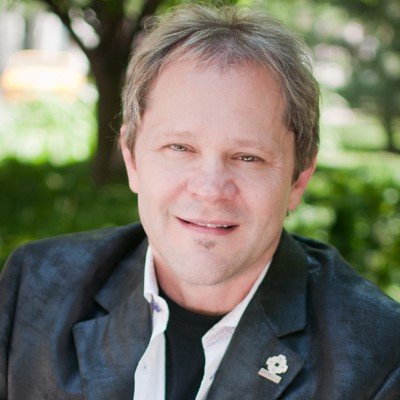
Allan Schoenberg: My Twitter “Patient Zero”

Ever heard of a woman named Mary Mallon? Probably not. But if I said “Typhoid Mary” that might trigger some recognition. Mary Mallon was the index case for typhoid in the US in the early 1900s. She was a healthy carrier of the disease and spread it to at least 53 people before she was forcibly quarantined. Mary Mallon was the American typhoid epidemic’s Patient Zero.

For me, Allan Schoenberg played a similar role, but without the fever and malaise. I consider him to be my Twitter index case. (Stick with me here.)

I spent the first several months on Twitter not doing much. I followed a few people I knew from “real life” and a few who were into Georgia football. I didn’t even really think of it a professional networking medium at the onset. At some point, though, I caught the Twitter bug and from that point things changed dramatically. And I can trace that moment back to Allan.

It was about this time last year when I was working on putting together a photo book of pictures from my trip to Iceland. I tweeted about it and got a random @ reply from Allan commenting on how great Iceland was and how much he loved it when he had visited earlier in the year. I followed him back and checked out his profile, where I saw that he had a pretty sweet job as director of communications for CME Group. We continued to chat via Twitter throughout the next few weeks about everything from movies to beer (good beer) to the economic situation in Iceland.

Allan  Schoenberg and Amy MengelAllan was my conduit to the Twitter PR and communications world. Recognizing that he was pretty interesting guy with an interesting job in my field, I figured that I’d probably enjoy following some of his other Twitter pals. I began looking to see who he was following and unabashedly started poaching his network. This led me to people like Mike Pilarz, Arik Hanson, Matt Batt and Lauren Fernandez. They led me to others like David Mullen, Kellye Crane, Chuck Hemann and Scott Hepburn. And it just kept proliferating.

Today, I consider Allan and that initial group tops among my trusted colleagues, confidants and advisors. In the year since that first tweet about Iceland, I’ve started this blog and my consulting business, founded Social Media Breakfast Tech Valley, and forged what I consider to be lifelong friendships as well as professional alliances with people from Twitter. I’ve had the opportunity to meet most of my closest Twitter friends in person, despite the fact that they all live in far-flung places. Allan even got me a tour of the Chicago Mercantile Exchange when I was visited last spring.

So in the spirit of those Bud Light “Real Men of Genius” ads (though Allan would rightly never drink Bud Light):

I salute you, Mr. Twitter Uber-connector Index Case of Networking Genius Guy. Thanks.

Whose your Twitter Patient Zero?

Don’t let the “experts” intimidate you

brainThere’s been much discussion on blogs and Twitter recently about people proclaiming themselves social media experts or gurus or a host of other terms. Is there such a thing? Can anyone already claim to be an expert in such a nascent space? Will shoddy “experts” tarnish the reputations of those who really and truly are adept at using social media to enhance communications strategies? Is it bragging or bravado to call yourself (or allow someone to call you) a social media expert?

The reality is that many people who are actively engaged in social media could be considered an expert at some level– simply by the fact that they’re learning about the tools and using them. When you spend all day on Twitter with people like Todd Defren, Jason Falls, Beth Harte, Amber Naslund and Mack Collier, it’s easy to forget that some 5.99 BILLION people in the world don’t use Twitter and probably have no idea what it is capable of. Or that 5.82 BILLION people do not have Facebook accounts. They have never heard of FriendFeed, Flickr, Delicious, MySpace or Plurk. Heck, I have customers who run businesses and they don’t have an e-mail address! Even if you only know one-tenth-of-one percent as much as the Todds, Jasons, Beths, Ambers and Macks of the world, you are still ahead of the curve.

Now I am not saying that just because you have a Twitter account and a blog that you should christen yourself a social media expert and start selling or representing yourself as such. But you CAN teach people about social media and demonstrate its effectiveness. You CAN share your knowledge with co-workers and customers and suggest ideas for how to incorporate social media into existing communications and outreach efforts. Don’t be afraid to try things out simply because you’re not an “expert” about social media.

Experts are those whom others go to for advice because they are more knowledgeable about a particular topic than the average Joe or Jane. As Scott Hepburn said, “They chop lettuce.” The people I listed above are social media experts to me, and I have a huge amount of respect for their knowledge and skills in this space. But that doesn’t mean that I can’t add any value to people who know less than I do about the topic. I can give my co-workers blogging tutorials and explain social networking to my customers and try to help my parents figure out what it means to subscribe to my blog.

The only way people typically become expert at anything is to try something, fail a few times, learn from mistakes, and try again. No one is born as an expert at anything– expertise only comes as a result of knowledge and experiences.

Remember to keep things in perspective: the vast majority of the world is still in the dark on social media. So don’t let the social media experts intimidate you. Learn from them and then don’t be afraid to let others learn from you.

Image: Flickr user dierk_schaefer